
Many Palestinians say the ceasefire, which went into effect nearly four months ago, has brought little improvement to their daily lives.
TEL AVIV: The second phase of United States President Donald Trump’s Gaza peace plan was launched about two weeks ago, with a new “Board of Peace” established to oversee the territory, along with a committee of Palestinian technocrats.
But major obstacles remain.
These include Hamas’ refusal to disarm, Israel’s continued military presence in the Palestinian enclave, and a deepening humanitarian crisis.
Israel has been accused of blocking aid, shelter and essential supplies as winter storms batter Gaza.
Many Palestinians say the ceasefire – which went into effect on Oct 10, 2025 – has brought little improvement to their daily lives.
“The situation remains the same. Hunger is hunger, suffering is suffering, poverty is poverty, and bombing is bombing – it’s all the same,” said Gaza resident Mohammed.
Israel, meanwhile, has accused Hamas of deliberately delaying the return of dead hostages from Gaza. The last body was recovered only this week.
The war has also continued to claim lives.
Local authorities say almost 500 Palestinians have been killed in ongoing Israeli airstrikes and shootings since the truce began. According to the United Nations, at least 100 of them were children. Three Israeli soldiers have also been killed.
Palestinian deaths have become increasingly accepted by parts of the international community, said Xavier Abu Eid, a political scientist and former adviser to the Palestine Liberation Organization.
“Still some people refer to what’s happening as a diplomatic success,” he noted.
“The loss of Palestinian lives has been entirely normalised by a big part of the international community, particularly those behind the idea of a Board of Peace.”
FURTHER CHALLENGES
Despite both Israel and Hamas accusing each other of violating the first phase of the ceasefire, Trump has pressed ahead with the second phase.
Forming the Board of Peace and the Palestinian technocratic committee may have been the easier steps, but more difficult challenges now lie ahead – chief among them, the disarming of Hamas and the demilitarisation of Gaza.
Trump has warned that Hamas must give up its weapons or “it’s going to be the end of them”.
The Palestinian militant group has refused to disarm, saying only that it would consider “freezing” its weapons as part of a long-term truce.
Alon Liel, former Israeli ambassador and director-general of the Israeli Foreign Ministry, said he believes Hamas can be convinced to give up its arms if mediators Turkiye and Qatar are allowed to play a role on the ground.
Israel, however, opposes their involvement due to their close links with Hamas.
“They will lay down their arms if they feel they have somebody they can trust deep into the picture, deep into the game. And they trust Turkiye and Qatar,” said Liel.
Another major challenge will be assembling and deploying an international force to secure and demilitarise Gaza. Countries such as Indonesia and Bangladesh have expressed interest in participating, but no nation has publicly committed to sending troops.
Many Gazans are also opposed to the presence of foreign soldiers.
“We will consider any international military force that enters the area to be a new form of occupation, as the Palestinian people must be governed only by themselves,” said Rami, a Gaza resident.
Israel must also be convinced to withdraw its forces from the roughly 53 per cent of Gaza it still controls.
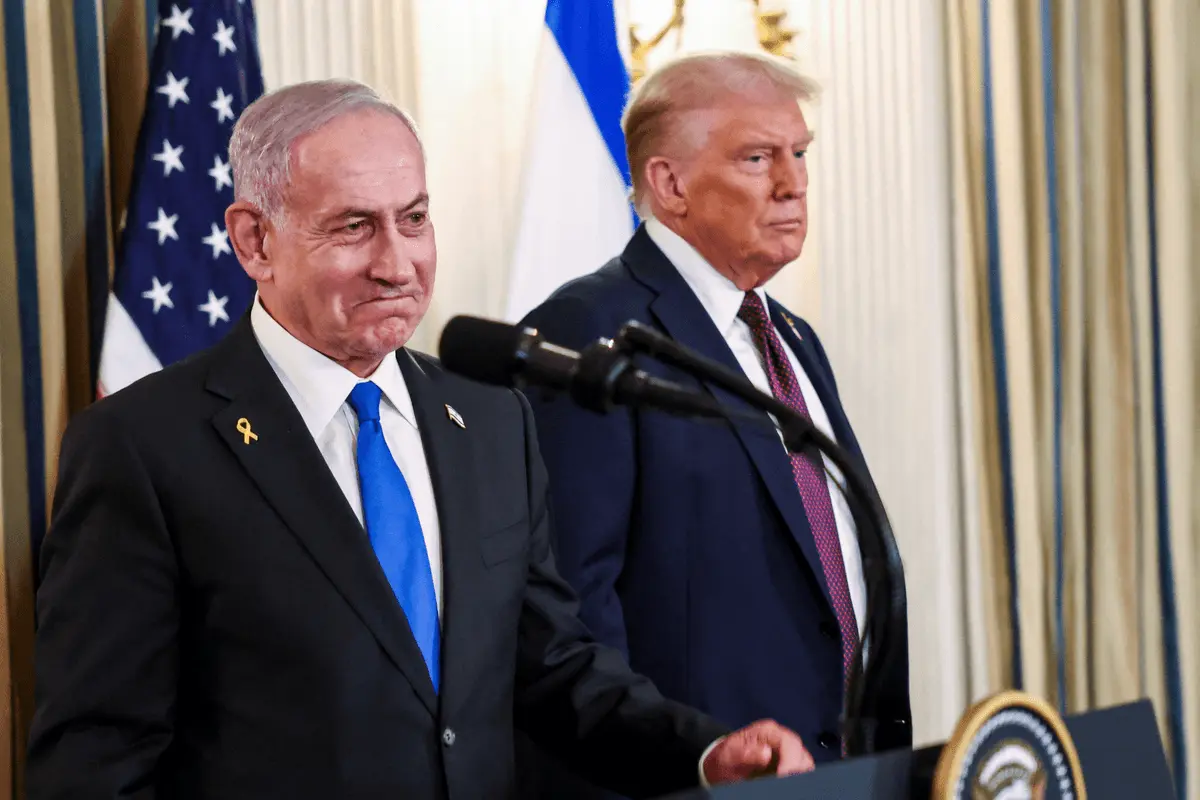
Israeli Prime Minister Benjamin Netanyahu is currently under pressure from his far-right coalition to remain in the territory and has described the US announcement of the second phase as a “declarative move”.
Liel noted: “Nothing of what’s happening now, Netanyahu likes.
“For him, politically, it’s a problem. He didn’t want to end the war … Phase two is imposed on him.”
The US has laid out ambitious reconstruction plans for Gaza, including a tourist zone along the coast, data centres and an airport.
But those visions stand in stark contrast to conditions on the ground, where much of Gaza has been reduced to rubble and the majority of the population remains displaced.
From Gaza today, the American vision of reconstruction remains both out of sight and out of reach.